7. Trigonometric Substitutions
Homework
-
\(\displaystyle \int \dfrac{\sqrt{1-x^2}}{x^2}\,dx \)
-
\(\displaystyle \int\dfrac{x^2}{\left(1+x^2\right)^{3/2}}\,dx\)
NOTE: There's massive algebra to check your antiderivative! -
\(\displaystyle \int \dfrac{1}{x^2\sqrt{x^2-1}}\,dx \)
-
\(\displaystyle \int_{\sqrt{2}}^2 \dfrac{x}{1-x^2}\,dx \) You must use a trig substitution. Check with an ordinary substitution.
-
\( \displaystyle \int_{1/2}^{\sqrt{2}/2} \dfrac{x}{x^2-1}\,dx \) You must use a trig substitution. Check with an ordinary substitution.
-
\( \displaystyle \int \dfrac{\sqrt{9x^2-16}}{x}\,dx \)
-
\(\displaystyle \int \dfrac{x^2}{(4-25x^2)^{3/2}}\,dx\)
-
\(\displaystyle \int \dfrac{4}{(4+9x^2)^{3/2}}\,dx\)
-
\(\displaystyle \int \dfrac{dx}{\sqrt{x^2+6x+5}}\)
-
Use a hyperbolic trig substitution to compute \(\displaystyle \int \dfrac{x^2}{\sqrt{1+x^2}}\,dx\)
-
Find the average value of the function \(f(x)=\sqrt{4-x^2}\) on the interval \([-1,1]\).
-
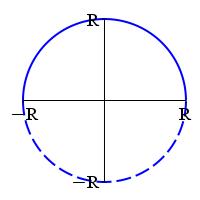
Prove the area of a circle of radius \(R\) is \(A=\pi R^2\) by computing the integral \(\displaystyle \int_{-R}^{R} \sqrt{R^2-x^2}\,dx\).
Evaluate each integral. Be sure to check your answer by differentiating, unless it is a definite integral.
Heading
Placeholder text: Lorem ipsum Lorem ipsum Lorem ipsum Lorem ipsum Lorem ipsum Lorem ipsum Lorem ipsum Lorem ipsum Lorem ipsum Lorem ipsum Lorem ipsum Lorem ipsum Lorem ipsum Lorem ipsum Lorem ipsum Lorem ipsum Lorem ipsum Lorem ipsum Lorem ipsum Lorem ipsum Lorem ipsum Lorem ipsum Lorem ipsum Lorem ipsum Lorem ipsum